
Michael Rand obituary
Fearless art director who defined photojournalism
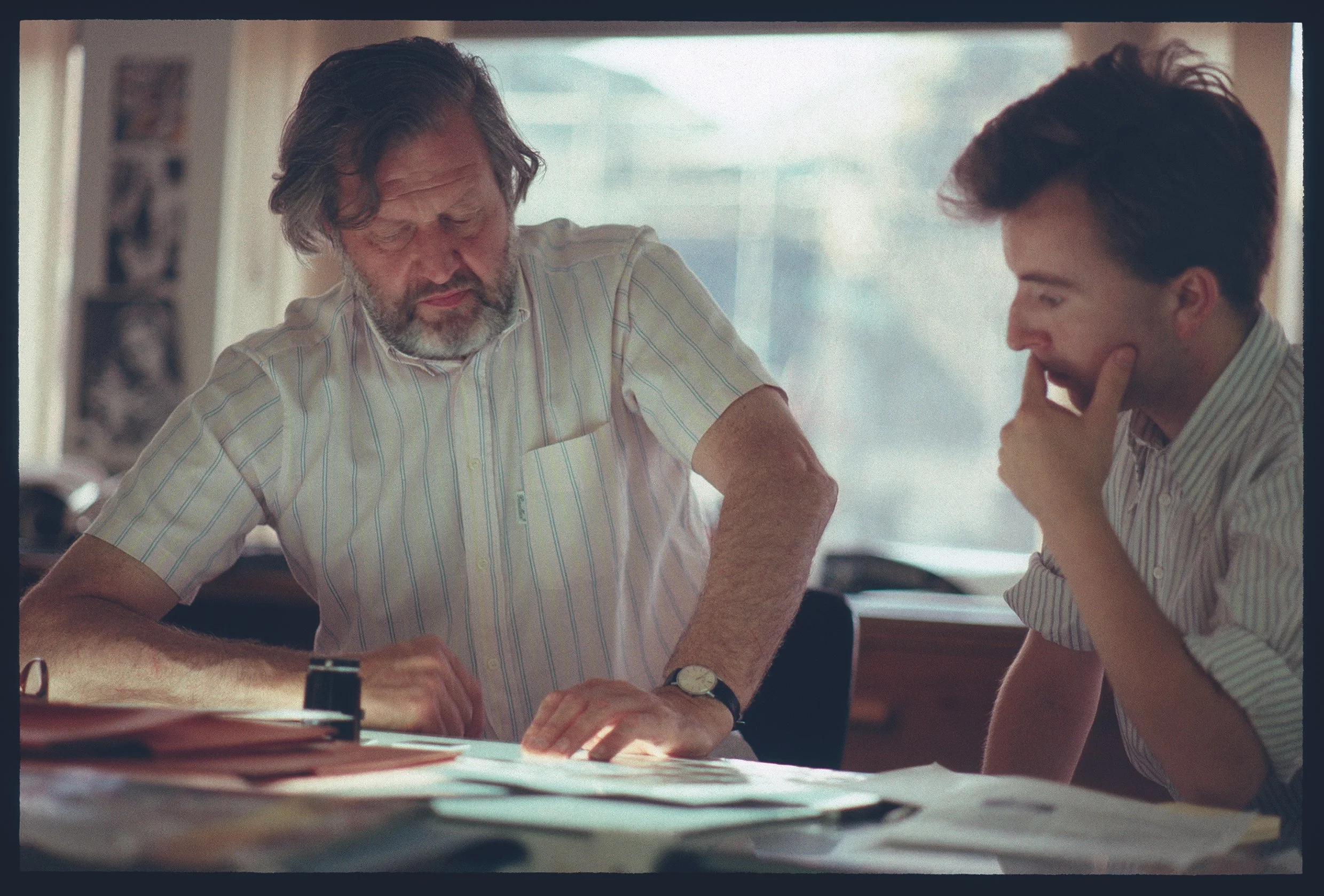
Michael Rand and a young TC, late 1980’s
First published in The Sunday Times, Thursday 29 May 2025
Groundbreaking editor with a sharp eye for design who spent three decades at The Sunday Times Magazine, dies aged 96.
In 1972 Michael Rand, the art director of The Sunday Times Magazine, took the bold, if questionable, decision to commission Hitler’s favourite film-maker, Leni Riefenstahl, to cover the Munich Olympics. That she was still suspected of harbouring Nazi sympathies was one thing; more controversial was the inevitable comparison with her film Olympia, shot at the 1936 Games in Berlin and seen as a celebration of Aryan manhood.
Rand was unapologetic. Not only did he consider Riefenstahl a great photographer, he knew this would be a journalistic coup, and he emphasised it by running a split shot on the cover juxtaposing a high jumper from the 1936 Games with another from Munich in 1972. Reaction from readers was surprisingly muted — today there would be a social media storm. The decision, however, illustrated two things that have cemented Rand’s reputation as the prime architect of 20th century photojournalism: an unerring eye for design and an instinct for news.
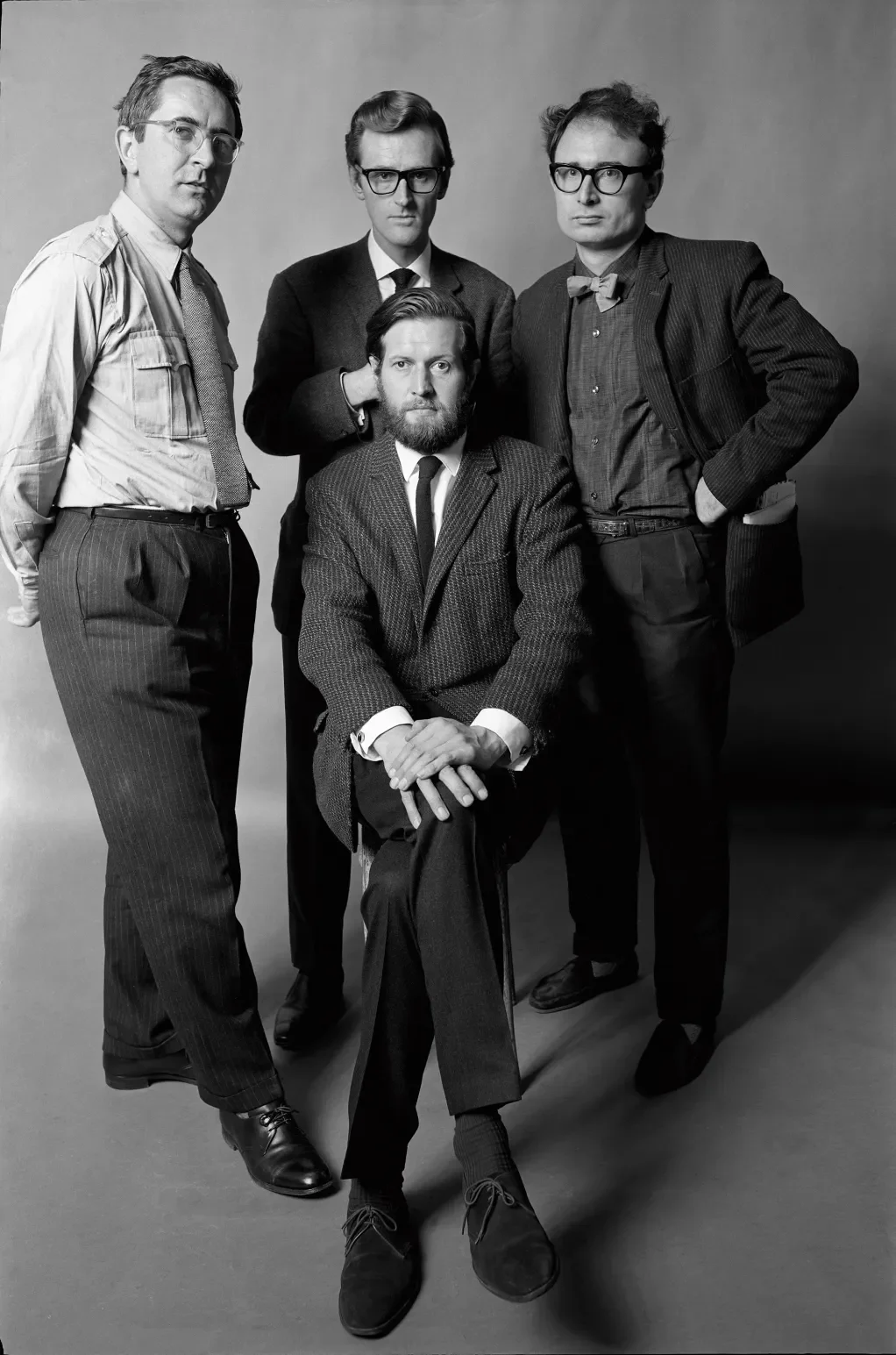
Rand was assisted by, standing from left, Len Deighton, Ray Hawkey and Clive Irving
He had learnt both under the influential Harold Keeble, the deputy editor of the Daily Express, who employed Rand and another innovative graphic designer, Ray Hawkey, and got them to use pictures as a way of dramatising the news. They invented a daily feature called PhotoNews, with a half-page dominated by one photograph, something that had not been seen in newspapers before.
As the art editor and director of The Sunday Times Magazine for 31 years, Rand created design of the highest order, making typography and image work together, with pictures bled to the edge of the page, and spreads that were allowed to run uninterrupted by advertisements in an era when cost was no object. Aided by a team that included the innovative art editor David King and the senior editor Francis Wyndham, Rand produced a series of memorable issues, using the most celebrated writers, photographers and graphic artists of the day.
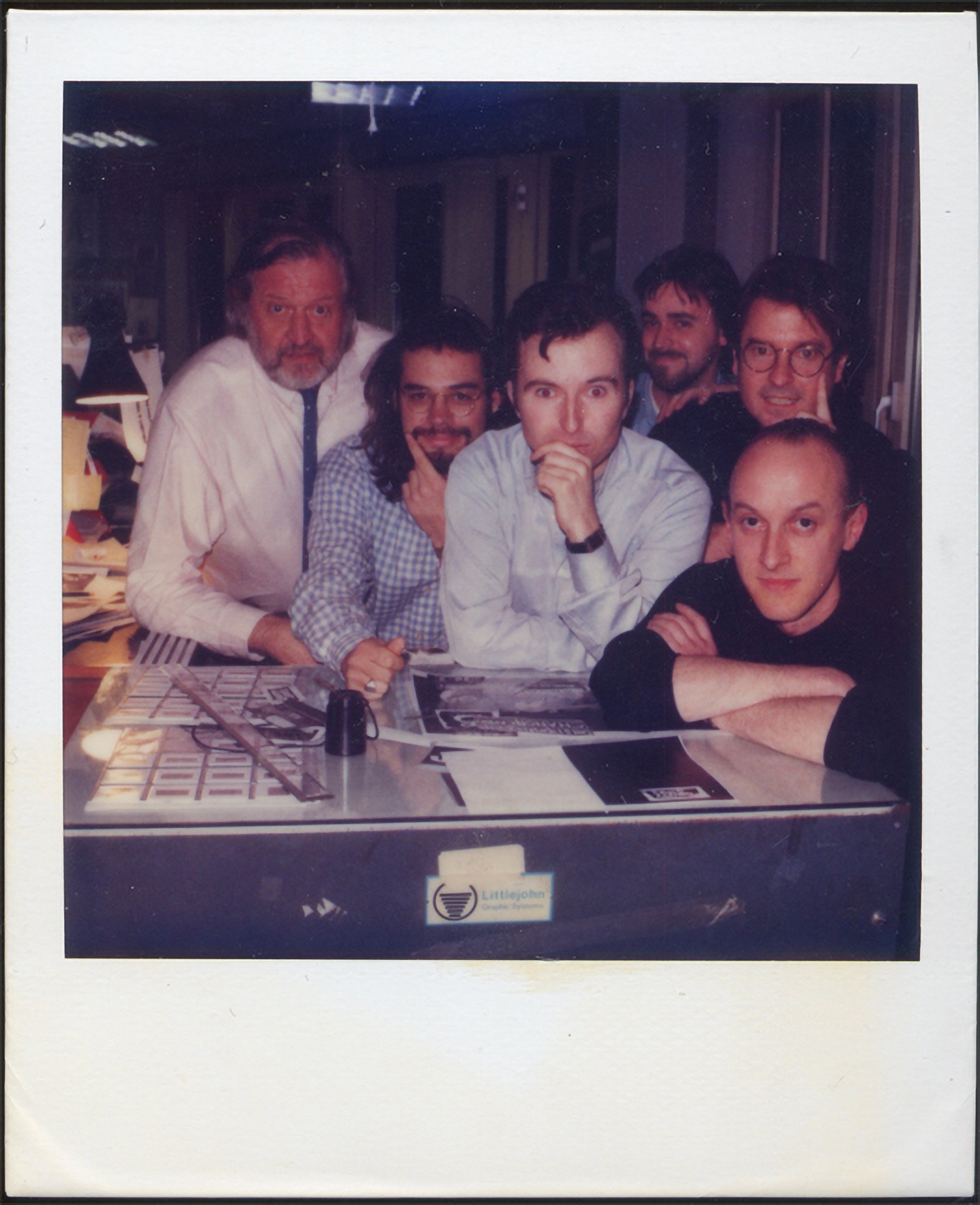
Sunday Times Magazine Art team, circa 1993
Sir Don McCullin, whose photography charted the war in Vietnam, remembers not only the space given to his pictures, but the freedom with which he was allowed to operate. “Michael basically gave me the greatest path in my career — I was in awe of him,” he said. “I was allowed to edit my own pictures. I’ve never known freedom like it. The magazine was drenched in talent. There was nowhere quite like it in the world.”
McCullin recalled being sent to Cuba with the Irish writer Edna O’Brien as the country withered under Fidel Castro, and seeing their feature given 18 pages. Lord Snowdon’s harrowing pictures of mentally disturbed children ran entirely in black and white. Henri Cartier-Bresson and Robert Freson were commissioned to cover Churchill’s funeral. Eve Arnold spent weeks in Saudi Arabia, photographing the women behind the veil. Pictures from the Apollo 11 moon mission were dispatched by private jet, with production time shortened from six weeks to five days. McCullin was sent to El Alamein with Field Marshal Montgomery to revisit his famous battle. Sebastiao Salgado produced one of the most electrifying pictures of all time — workers in a Brazilian goldmine; it dominated the magazine’s centre spread.
There were also quirkier ideas — the American photographer Diane Arbus was brought out of obscurity to photograph the weird pop singer Tiny Tim; Jacques-Henri Lartigue, old enough to have photographed Blériot’s pioneering flights, was persuaded to take pictures of skimpily clad models at a Paris ready-to-wear show; David Bailey went out with the murderous Kray twins, an assignment he found so risky he brought two bodyguards with him; Roger Law, of Spitting Image fame, created outrageous models; and Riefenstahl was asked to photograph Mick and Bianca Jagger. “Who is this Jaeger person?” she asked. “I have never heard of him.”
Tall and bearded, looking surprisingly like the sailor on the Player’s Navy Cut cigarette pack, Rand was soft-voiced and often silent during magazine conferences. He was a dominating presence, however, and his decision was always final; successive editors, such as Mark Boxer, Godfrey Smith and Magnus Linklater deferred to him when it came to the choice of pictures, where his power was absolute and occasionally ruthless.
When the indulgent Smith commissioned a feature to be called “A Day in the Life of Sarajevo”, half the magazine staff were dispatched to Yugoslavia where they spent a week being driven around in government cars, enjoying the hospitality of the town. On their return, Rand took one look at the pictures and vetoed the project, despite its cost. When nothing had appeared some weeks later, President Tito himself complained to the proprietor, Lord Thomson — to no avail. “Michael doesn’t like the pictures,” was enough to consign it to the dustbin. The journalist David Robson, who worked for him, recalled: “He had weight that didn’t need to be thrown around — his was the weight of authority and other people’s admiration.”
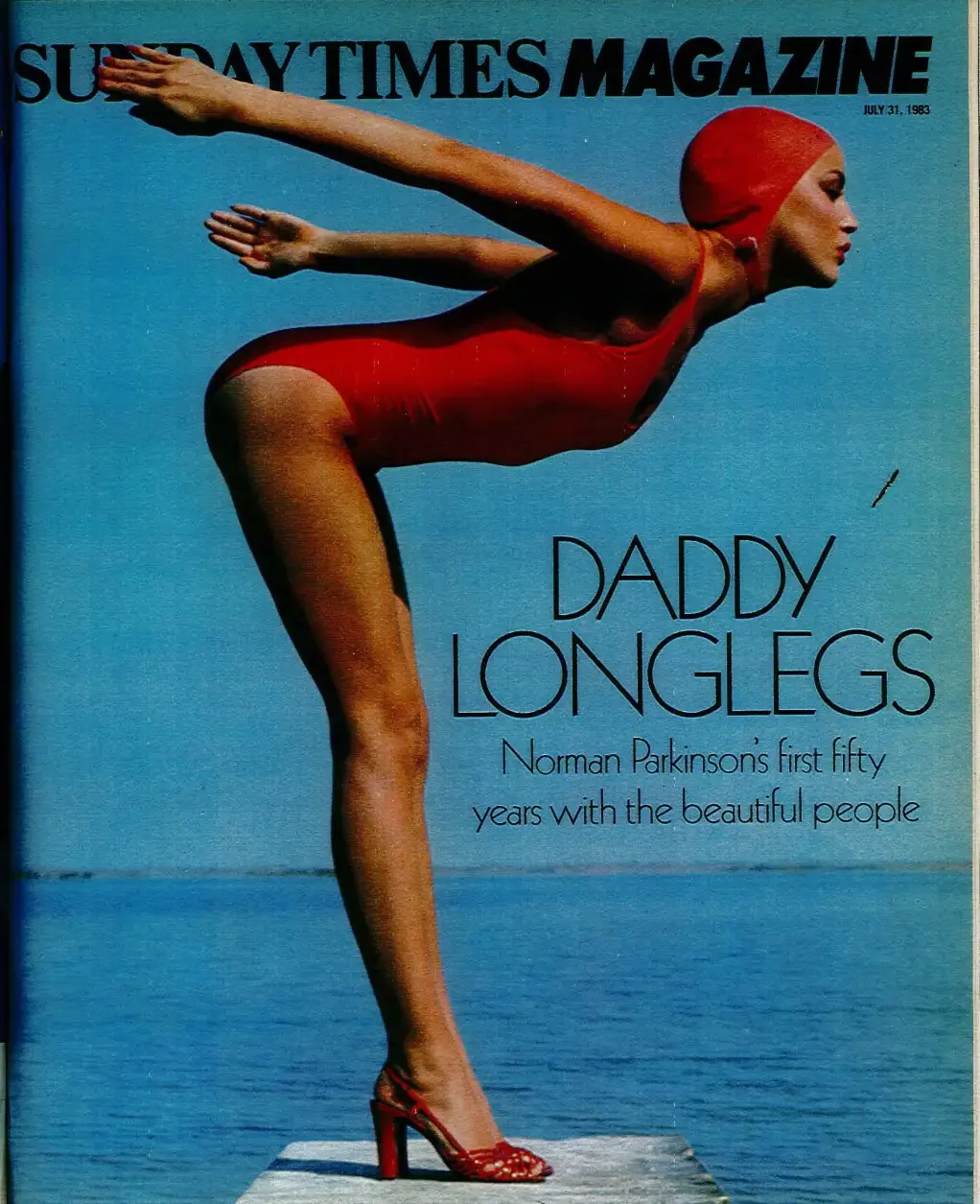
The Sunday Times Magazine, July 1983
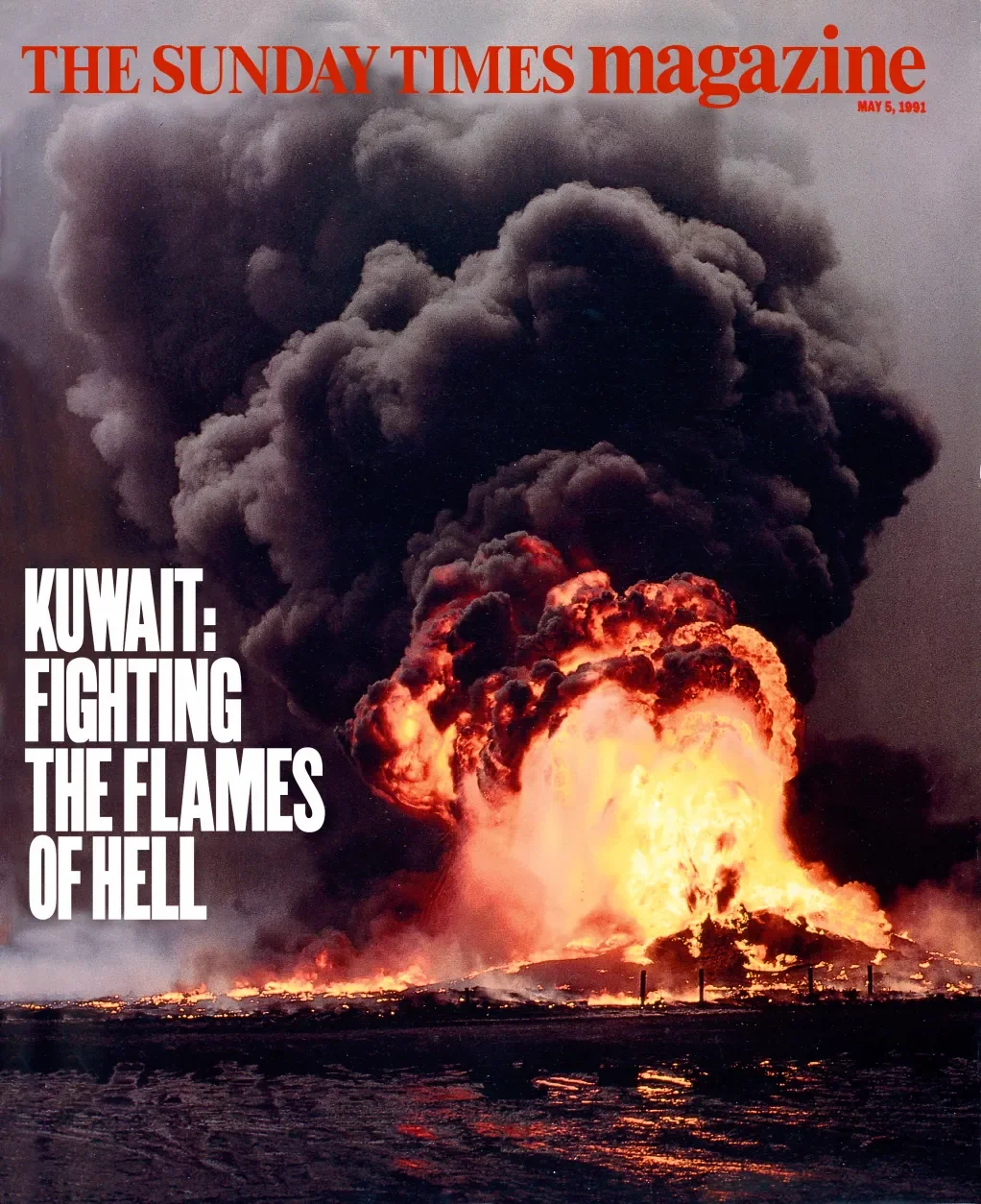
The Sunday Times Magazine, May 1991
Michael Telfer Rand and his late sister Pamela were brought up in surroundings of suburban gentility in Hayes, near Bromley in Kent, by their father, Victor, a bank manager, married to Doris, née Hooton. At the age of six, Rand lost the sight of his right eye when a thorn got stuck in it as he was climbing a tree. Later, he would acquire a glass eye, and few of his colleagues realised that one of the great art editors of his day could see only through his left eye.
Educated at Bromley County Grammar School, Rand did National Service as a regimental pay sergeant. His testimonial on leaving said he had carried out his duties “very satisfactorily … smart in appearance and with a pleasant manner, he has proved himself to be thoroughly reliable and trustworthy”. He went on to attend Goldsmiths’ College, where he studied graphic design. His contemporaries included Bridget Riley, Mary Quant, her husband Alexander Plunket Greene, and the art forger Tom Keating, and it was there he met his future wife, Sheila Ware, who was studying fine art. Their wedding took place in August 1954, and they enjoyed a long and happy marriage for 69 years until Sheila’s death in 2023. They had one daughter, Selina, who was first an air hostess, then took a degree in anthropology and became a teacher. She recalled her father as “dependable, glamorous, cool, and very exacting, someone who would never promise to do anything and not do it”.
His progress from the Daily Express to The Sunday Times took place as newspapers were reaching the height of their powers — influential, populist, rich in readership and advertising. The launch of The Sunday Times Magazine in 1962 had been shaky, but when Rand joined Boxer, its first editor, it was beginning to come into his own. From an early stage he took command of the “flat plan” which dictated where colour, black and white, and advertisements would fall, and his word was considered final. A photograph to mark the total eclipse of the sun in July 1972 appeared entirely in black across two pages, with a thin sliver of light in the top left-hand corner. “My God, we could have sold that for £10,000,” said an appalled advertising executive. Rand raised an eyebrow. “That is not what this magazine is about,” he commented.
With young journalists, he was kind and hospitable. Many of them, including the writer Robert Lacey, were invited down to have lunch at the Rand home in Blackheath — a Span house, which was a modern concept of living, designed by the architects Eric Lyons and Geoffrey Townsend, which once featured in a design magazine as the epitome of trendy living. His own passion was sailing Thames barges, where he would pose at the wheel, just like the officer in the Player’s Navy Cut advertisement.
He never fully recovered from a major operation in 2016 to remove a benign brain tumour, but died at home with his daughter holding his hand.
When, in 1994, Rand finally stepped down from the magazine, he took on several design assignments, including the New Statesman’s covers. For many years, he was on the governing body of Ravensbourne College of art and design. In 1989 he was recruited by Rupert Murdoch to take over the art direction of his magazine, Mirabella, which he did for five years. He was also responsible for the design and production of the News Corporation’s annual report.
He was chairman of the UK committee for World Press Photo, honorary fellow of the Royal Photographic Society, and president of the Design and Art Director Awards, after, in the course of his career, winning most of their awards.
Looking back at his time in journalism, he once said: “I never attempted a style for The Sunday Times Magazine. I just wanted it to be busy, but simply laid out. There had to be some tension there: a bit of grit and glamour.”
Michael Rand, art director, was born on April 7, 1929. He died on May 12, 2025, aged 96
